Uganda Vs Rwanda Gorilla Trekking: Which Is Better?
Uganda Vs Rwanda Gorilla Trekking: Which Is Better? Deciding between Uganda and Rwanda for mountain gorilla trekking is one of the most critical choices you will make when planning an East African safari. Both countries offer the rare privilege of standing just metres away from wild mountain gorillas in their natural habitat. However, the experiences, logistical requirements, terrain, and total costs differ significantly.
Neither destination is universally “better.” The ideal choice depends on your budget, available travel time, physical fitness, and desired overall safari itinerary.
This guide provides an honest, expert comparison of gorilla trekking in Uganda versus Rwanda to help you choose the right experience for your journey.
At a Glance: Uganda vs Rwanda Gorilla Trekking Comparison
For a quick overview of how the two countries compare, the table below highlights the core differences across permits, logistics, terrain, and safari options.
| Comparison Feature | Uganda (Bwindi & Mgahinga) | Rwanda (Volcanoes National Park) |
| Standard Permit Cost | $800 USD per person | $1,500 USD per person |
| Gorilla Habituation Permit | $1,800 USD (4 hours with gorillas) | Not Available |
| Drive Time from Main Airport | 8–10 hours (Entebbe) or 1-hour flight | 2.5–3 hours (Kigali) |
| Drive Time via Cross-Border Route | 4–5 hours (Fly to Kigali, drive to Bwindi) | 2.5–3 hours (Kigali to park gates) |
| Habituated Gorilla Groups | 25+ groups across 5 sectors | 12 groups |
| Trekking Terrain & Elevation | Dense, tangled rainforest; steep ridge climbs (1,160m–2,600m) | Open bamboo slopes, volcanic soil; higher altitude (2,500m–3,000m+) |
| Trek Duration | 2 to 7+ hours (Highly variable) | 2 to 5 hours (Generally shorter) |
| Accommodation Profile | Broad range (Budget, Mid-range, High-end Luxury) | Predominantly Ultra-Luxury & High-End |
| Big Five Safari Add-Ons | Excellent (Queen Elizabeth, Murchison Falls, Kibale) | Good (Akagera NP, Nyungwe Chimpanzees) |
-
Permit Costs and Overall Travel Budget
Gorilla trekking permit pricing is usually the first factor travellers consider when comparing Uganda and Rwanda. However, calculating the true financial value requires looking at total safari costs, including accommodation, ground transport, and domestic flights.
UGANDA PERMIT: $800 USD | RWANDA PERMIT: $1,500 USD | DIFFERENCE: $700 USD PER PERSON
Uganda Gorilla Permits ($800 USD)
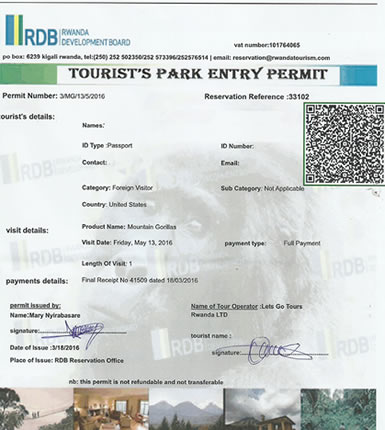
Uganda’s standard gorilla trekking permit costs $800 USD per person for foreign non-residents. Issued by the Uganda Wildlife Authority (UWA), this permit grants one hour with a habituated gorilla family once located.
For travellers seeking a deeper encounter, Uganda offers an exclusive option: the Gorilla Habituation Experience (GHE) in the Rushaga sector of Bwindi Impenetrable National Park. For $1,500 USD, you join researchers and trackers to spend 4 full hours with a gorilla group undergoing habituation.
Rwanda Gorilla Permits ($1,500 USD)
Rwanda’s standard permit costs $1,500 USD per person, administered by the Rwanda Development Board (RDB). Rwanda positioned Volcanoes National Park as a high-end, low-footprint destination, doubling its permit price in 2017 to fund local community development and intensive conservation efforts.
Rwanda occasionally offers seasonal discounts (such as 30% off permits during the May–November wet season), provided travellers spend additional nights in other Rwandan national parks like Akagera or Nyungwe.
The True Cost Breakdown
While Uganda’s permit is $700 USD cheaper per person, keep transport logistics in mind:
- In Uganda, driving from Entebbe International Airport to Bwindi takes 8–10 hours, often requiring a domestic fly-in safari ticket (around $500–$600 USD return via scheduled flights to Kihihi or Kisoro airstrips).
- In Rwanda, Volcanoes National Park is a straightforward 2.5-hour paved drive from Kigali International Airport, eliminating internal flights or overnight travel stops.
- Lodging Tiers: Uganda offers a wider range of budget, mid-range ($250–$500/night), and luxury lodges ($800–$1,500+/night). Rwanda’s accommodation around Musanze is heavily oriented toward top-tier, ultra-luxury lodges ($1,500–$3,500+/night), though comfortable mid-range options exist.
For couples or families, saving $700 per permit in Uganda often offsets internal flight costs or extends the overall duration of the safari.
-
Travel Logistics, Airport Proximity, and Flight Times
Travel time between the international airport and the national park is one of the most noticeable differences between the two countries.
KIGALI TO VOLCANOES NP: ~2.5 Hours | ENTEBBE TO BWINDI: ~8–10 Hours (or 1-hour flight)
Rwanda: Speed and Convenience
Rwanda is suited for travellers on short itineraries, executive weekend breaks, or those who prefer short driving distances.
- Arrive at Kigali International Airport (KGL).
- Drive 2.5 to 3 hours along smooth, paved highways through rolling countryside to Musanze (the gateway to Volcanoes National Park).
- You can land in Kigali in the afternoon, arrive at your lodge by dinner, trek gorillas early the next morning, and fly out the following night if needed.
Uganda: Broader Landscapes and Fly-In Options
Uganda’s primary gorilla sanctuary, Bwindi Impenetrable National Park, sits in the far southwestern corner of the country.
- By Road: Driving from Entebbe International Airport or Kampala takes 8 to 10 hours. While scenic—passing equator crossings, terraced hills, and rural towns—it consumes two full travel days at the start and end of your safari.
- By Domestic Flight: To avoid long road journeys, small domestic feeder flights fly daily from Entebbe to Kihihi Airstrip (for northern Bwindi sectors) or Kisoro Airstrip (for southern Bwindi sectors and Mgahinga). Flight time is approximately 1 hour, followed by a 1- to 2-hour lodge transfer.
The Smart Alternative: Fly into Kigali, Trek in Bwindi
Our favorite, and popular, cost-effective route is flying into Kigali International Airport (Rwanda) and crossing the land border into Uganda to trek in Bwindi or Mgahinga.
- Driving from Kigali to southern Bwindi (Rushaga or Nkuringo sectors) or Mgahinga National Park takes only 4 to 5 hours, including the border crossing at Cyanika or Katuna.
- This route combines Uganda’s $800 permit with Rwanda’s short airport transfers, offering a practical balance for time- and budget-conscious travellers.
-
Terrain, Vegetation, and Hiking Difficulty
Because mountain gorillas move freely across vast territories, no two treks are identical. However, the terrain and vegetation in Bwindi differ considerably from the Virunga Volcanoes.
BWINDI: Dense, rainforest canopy, steep ridges, thick undergrowth.
VOLCANOES: Open bamboo stands, volcanic soil, higher elevation.
Hiking in Bwindi Impenetrable National Park (Uganda)
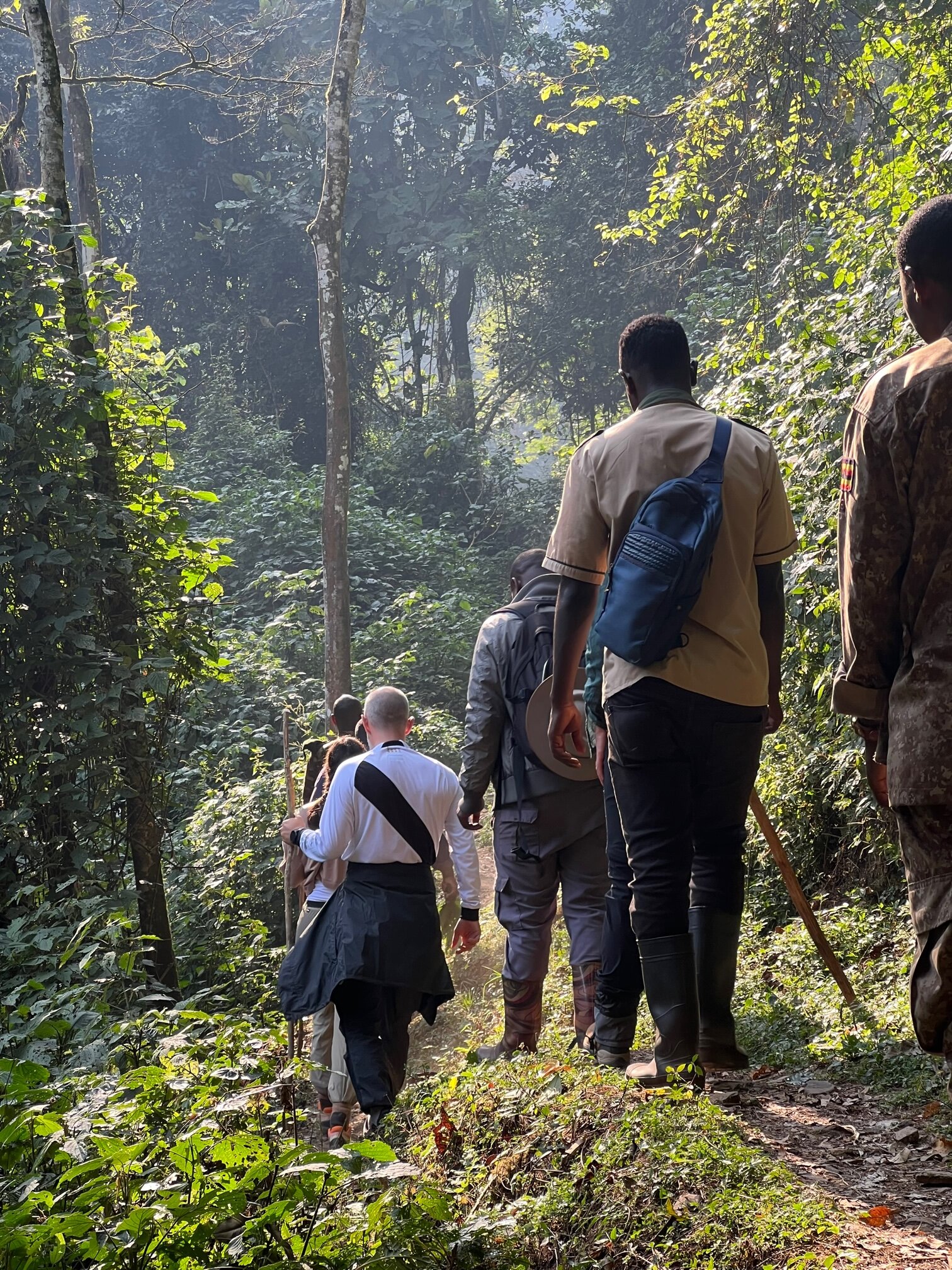
Bwindi lives up to its name. It is an ancient, primary rainforest characterized by dense canopies, tangled vines, giant tree ferns, and slippery undergrowth.
- Topography: Treks involve climbing steep, muddy ridges and descending into deep ravines off established footpaths. Trackers frequently use machetes to clear trails through the bush.
- Elevation: Elevations range from 1,160 metres to 2,600 metres above sea level. While altitude sickness is rare in Bwindi, the constant vertical climbing over uneven ground demands good physical stamina.
- Microclimate: The dense forest canopy traps humidity, making treks warmer and wetter.
Hiking in Volcanoes National Park (Rwanda)
Volcanoes National Park protects the steep slopes of the Virunga Mountain range (including Mount Karisimbi, Bisoke, Mikeno, and Sabyinyo).
- Topography: The lower and middle reaches of the park consist largely of bamboo forests. Bamboo offers clearer visibility, wider pathways, and softer underfoot conditions than jungle roots.
- Elevation: Treks start higher—typically between 2,500 metres and 3,000+ metres above sea level. While terrain underfoot can be gentler than Bwindi’s steep ravines, the higher altitude can make climbing noticeably more tiring.
- Microclimate: Air is cooler and crisp, though volcanic soil turns to slick mud following rain.
Trekking Tip: Regardless of country, always hire a local porter at the park headquarters ($20–$25 USD). Porters carry your backpack, assist you across steep or muddy sections, and provide direct employment to families living around the national parks.
-
Gorilla Habituation Experience vs. Standard Gorilla Trekking
When weighing Uganda against Rwanda, consider how much time you want to spend in the presence of mountain gorillas.
Standard Gorilla Trekking (Uganda & Rwanda)
- Time with Gorillas: Exactly 1 hour from the moment your group encounters the family.
- Group Size: Maximum of 8 tourists per gorilla family per day.
- Availability: Available in both Volcanoes National Park (Rwanda) and across all sectors of Bwindi and Mgahinga (Uganda).
Gorilla Habituation Experience (Uganda Exclusive)
If 60 minutes feels too short, Uganda offers the Gorilla Habituation Experience (GHE) in Bwindi’s Rushaga sector.
- Time with Gorillas: 4 hours with a gorilla family.
- Group Size: Restricted to a maximum of 4 tourists per group, offering an intimate setting.
- The Experience: You accompany Uganda Wildlife Authority researchers, trackers, and rangers who are actively acclimatizing a wild family to peaceful human presence. You observe natural behaviors, vocalizations, and movement patterns alongside scientists who explain every interaction.
- Cost: $1,500 USD—matching the price of a standard 1-hour permit in Rwanda, but quadrupling your time with the gorillas. Effective 1st January 2027, gorilla habituation permit cost is $1,800.
-
Accommodation Options and Luxury Standards
Your choice of country will influence the style and pricing of lodges available near the park gates.
RWANDA: Focused on ultra-luxury eco-lodges and world-renowned brands.
UGANDA: Balanced range from rustic budget camps to high-end boutique retreats.
Lodges in Rwanda (Volcanoes National Park)
Rwanda is an established destination for luxury safari travel in East Africa. The outskirts of Volcanoes National Park feature high-end eco-lodges with heated plunge pools, private butler service, fireplace lounges, and tailored cuisine.
- Luxury & Ultra-Luxury: Properties such as Singita Kwitonda Lodge, Bisate Lodge (Wilderness), One&Only Gorilla’s Nest, and Virunga Lodge offer exceptional service and mountain views.
- Mid-Range & Budget: Options like Five Volcanoes Boutique Hotel, Mountain Gorilla View Lodge, and Le Bambou Gorilla Lodge offer comfortable, warm hospitality close to the Kinigi park headquarters.
Lodges in Uganda (Bwindi & Mgahinga)
Because Bwindi is split into four distinct trekking sectors (Buhoma, Ruhija, Rushaga, and Nkuringo), lodges are spread across different regions of the park.
- Luxury: Sanctuary Gorilla Forest Camp, Clouds Mountain Gorilla Lodge, Volcanoes Bwindi Lodge, Mahogany Springs, and Gorilla Heights Lodge offer refined comfort, cliffside views, and easy access to trek starting points.
- Mid-Range & Comfort: Bwindi has a strong selection of mid-range properties ($250–$500 per night) such as Haven Lodge Buhoma, Bakiga Lodge, and Four Gorillas Lodge.
- Budget: Characterful, locally owned community camps and eco-lodges are widely available near all sector gates.
-
Combining Gorilla Treks with Big Five Safaris and Extensions
A mountain gorilla encounter usually lasts a few hours, so most travellers combine their trek with traditional game drives, primate walks, or cultural experiences.
Uganda: The Complete Big Game & Primate Circuit
Uganda is well suited for a multi-week, all-in-one safari destination. The country’s parks sit within reasonable driving distance of Bwindi:
- Queen Elizabeth National Park: Located 3–5 hours north of Bwindi, famous for tree-climbing lions in the Ishasha sector, Kasenyi plains game drives, and Kazinga Channel boat cruises.
- Kibale National Park: The premier destination in East Africa for chimpanzee tracking, home to 13 primate species.
- Murchison Falls National Park: Dramatic landscapes where the Nile squeezes through a 7-metre gorge, offering Big Five game viewing and boat safaris.
- Lake Mburo National Park: Convenient half-way stop for walking safaris, impalas, zebras, and night game drives.
Rwanda: Clean Circuits and High-End Combinations
Rwanda offers concise, scenic travel legs on well-maintained roads:
- Akagera National Park: Rwanda’s Big Five savannah reserve, featuring lion and rhino reintroductions, rolling hills, and lake cruises.
- Nyungwe National Park: An ancient montane rainforest offering canopy walks, wild chimpanzee tracking, and tea estate tours.
- Lake Kivu: Located an hour from Volcanoes National Park, offering lakeside relaxation, kayaking, and boat trips around Gisenyi or Karongi.
- Savannah Extensions: Many visitors choose to fly directly from Kigali to Kenya’s Masai Mara or Tanzania’s Serengeti for classic Wildebeest Migration viewing.
-
Best Time to Visit for Gorilla Trekking
Gorilla trekking in both Uganda and Rwanda is a year-round activity. Because both regions sit near the Equator in high-altitude tropical mountain zones, rain can fall at any time of year. However, seasonal conditions impact trail mud, visibility, and walking difficulty.
DRY SEASONS (BEST): June to September & December to February
WET SEASONS (LOW SEASON): March to May & October to November
Dry Seasons (June – September & December – February)
- Conditions: Less rainfall, drier trails, and easier walking conditions underfoot.
- Pros: Ideal for hiking; forest canopy is less dense, improving photographic conditions.
- Cons: High demand for gorilla permits and popular lodges. Permits for both Bwindi and Volcanoes NP often sell out 6 to 9 months in advance.
Rainy / Wet Seasons (March – May & October – November)
- Conditions: Frequent heavy downpours, slippery clay tracks, and misty mountain slopes.
- Pros: Gorillas often stay at lower elevations where food (like young bamboo shoots) is abundant, which can shorten initial tracking times. Lodges may offer lower seasonal rates, and permit availability is higher.
- Cons: Physical trekking is more strenuous due to deep mud and slick footpaths.
-
Essential Safari Packing Checklist
Trekking through dense rainforest or volcanic bamboo requires practical gear to protect against thorns, biting insects, and sudden rain showers.
- High-Traction Hiking Boots: Broken-in waterproof boots with good ankle support are essential for muddy slopes.
- Long-Sleeved Shirts & Trousers: Lightweight, moisture-wicking fabrics in neutral colors (khaki, green, tan). Tuck trousers into long socks to keep safari ants out.
- Gaiters: Recommended for keeping mud, stones, and water out of your boots.
- Gardening Gloves / Padded Work Gloves: Invaluable for gripping thorny vines, nettles, and muddy branches while climbing steep slopes.
- Waterproof Rain Jacket: A breathable, fully waterproof outer layer is necessary even during the dry season.
- Daypack with Rain Cover: Waterproof backpack to carry your camera gear, water, packed lunch, and spare layers.
- Walking Sticks: Provided at park headquarters or by lodges; highly recommended for balance on slippery descents.
Frequently Asked Questions
Is gorilla trekking better in Uganda or Rwanda?
Neither country is objectively better; they offer different safari experiences. Rwanda offers shorter driving times, simpler airport logistics, and luxury infrastructure near Volcanoes National Park. Uganda offers $800 permits, broader lodge selections, the 4-hour Gorilla Habituation Experience, and easy combinations with Big Five game drives in Queen Elizabeth National Park.
Why are Rwanda gorilla permits so expensive ($1,500)?
Rwanda adopted a high-end, low-impact tourism strategy. The $1,500 permit fee directly funds mountain gorilla conservation, round-the-clock veterinary care (via Gorilla Doctors), park rangers, and local community infrastructure (10% of permit revenue is shared with communities bordering the park).
Can I fly into Kigali and trek gorillas in Uganda?
Yes, this cross-border option is widely used. By flying into Kigali International Airport (Rwanda), you can drive 4 to 5 hours across the land border (via Cyanika or Katuna) into southern Bwindi or Mgahinga in Uganda. This avoids Uganda’s 9-hour drive from Entebbe while keeping your permit cost at $800.
What is the physical difficulty difference between Bwindi and Volcanoes National Park?
Bwindi features steep, muddy ridges and dense jungle undergrowth with no fixed paths, demanding good physical balance and agility. Volcanoes National Park features higher starting elevations (2,500m–3,000m+) which can cause breathlessness, but the bamboo forest paths are generally wider and less tangled underfoot.
What is the success rate of seeing mountain gorillas?
The success rate of finding mountain gorillas in both Uganda and Rwanda is over 98%. Expert advance trackers head into the forest at dawn to locate the family groups based on where they nested the previous night, guiding your trekking group directly to their location.
How far in advance should I book gorilla permits?
Gorilla permits should be booked 4 to 9 months in advance, especially if travelling during the peak dry seasons (June to September and December to February). Permit numbers are strictly capped per group to protect the gorillas from stress and disease.
Is the Gorilla Habituation Experience in Uganda worth it?
For wildlife enthusiasts, photographers, and passionate safari goers, the Gorilla Habituation Experience is an excellent investment. Spending 4 full hours with a semi-habituated gorilla group alongside trackers and scientists provides deeper insights into gorilla behavior than the standard 1-hour visit.
Plan Your Mountain Gorilla Safari with Rowin Africa Safaris
Uganda Vs Rwanda Gorilla Trekking: Which Is Better? Choosing between Uganda and Rwanda comes down to aligning your safari budget, schedule, and preferred travel style. Whether you want an executive weekend trek in Volcanoes National Park, a cross-border journey from Kigali into Bwindi, or a multi-week Ugandan circuit combining Big Five game drives with chimpanzees and mountain gorillas, Rowin Africa Safaris handles every logistical detail.
Our local safari specialists manage your gorilla permit bookings, private 4×4 land cruiser transport, domestic bush flights, and hand-picked lodge reservations across Uganda and Rwanda.
Ready to start planning? Tell us your target travel dates, ideal budget, and what you most want to see, and we will build a custom East African safari tailored to your travel priorities.