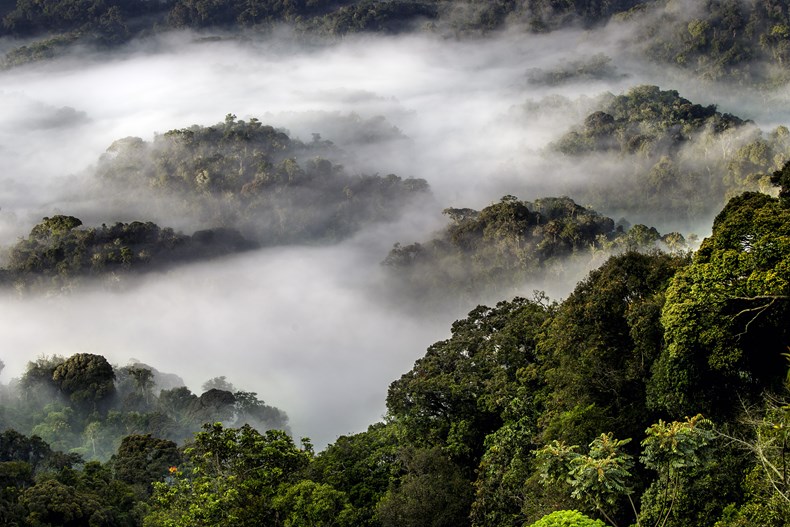
The most recent national park to be created was Gishwati Mukura in 2015. The park’s prime task was to preserve the nation’s wildlife, particularly the chimpanzees who live there. The park, which combines Mukura and Gishwati forests, is the smallest of them all, with a total area of 34 square kilometers. The most popular national park in Rwanda for safaris right now is this, which allows visitors to see certain animals native to the Albertine region. Rwanda’s northwest is where the park is situated.
Attractions in Gishwati Mukura National Park.
Primates.
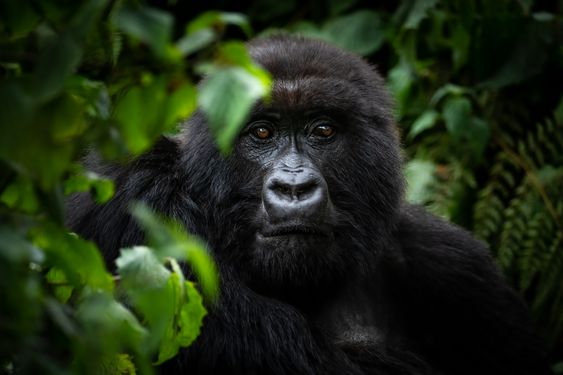
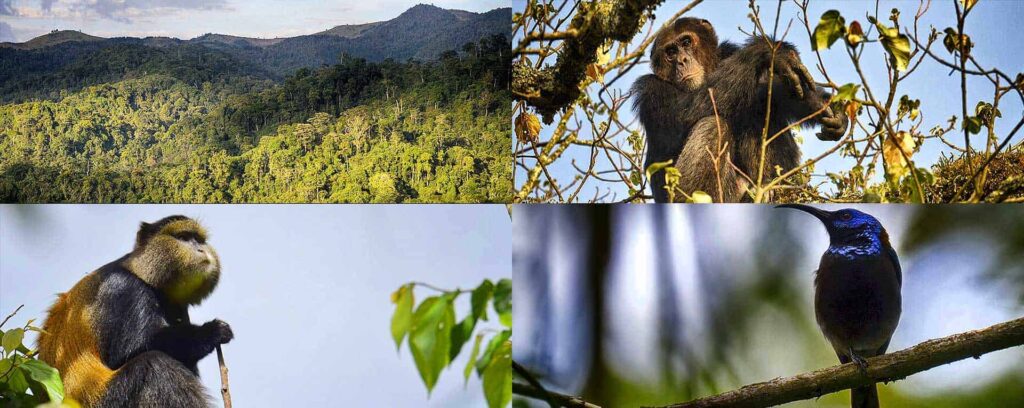
On a Rwanda safari, Gishwati Mukura National Park is the best attraction because it has the greatest concentration of primates. The park’s chimpanzees, who are its big attraction, are a result of the dense forests that surround it. Other primates that may be seen in the park include olive baboons, white and black colobus monkeys, and other species. Chimpanzees are a major attraction for travelers looking at Rwanda safaris.
Wildlife.
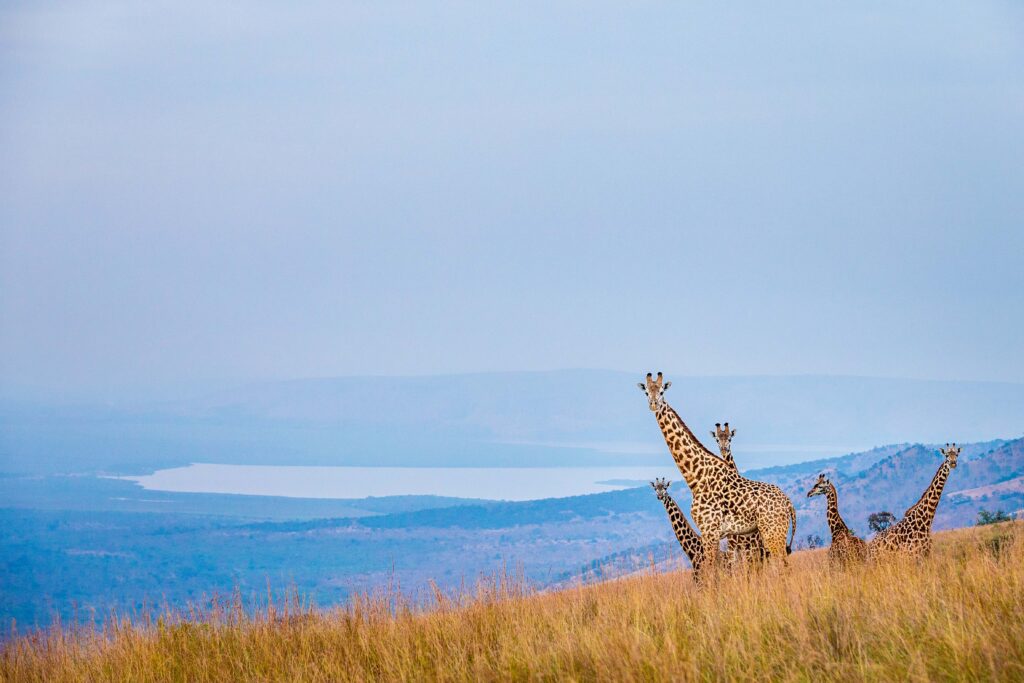
The Gishwati Mukura National Park is home to numerous animal species, primarily primates like chimpanzees, but there are also numerous other large mammals, including buffalos, as well as other species like the African Palm Civet, Serval Cat, Side Striped Jackal, Giant Pouched Rat, Bush Pig, and Giant Pouched Rat that can be seen in the forest.
Bird species.
The presence of many tree species in Gishwati Mukura National Park makes it one of the best places in the world for birds to live, such the Grey Crowned Crane, Regal Sunbird, Ruwenzori Batis, Dusky Crimson wing, Mountain Yellow Warblers, and many others.
Activities done at Gishwati Mukura National Park.
Chimpanzee trekking.
The primary safari activity in Gishwati Mukura National Park is chimpanzee trekking, which begins with a training on the rules and guidelines to respect to while undertaking chimpanzee trekking at the park headquarters early in the morning. Following the briefing, you might be divided into various groups under the direction of knowledgeable guides who travel along various trekking trails in the jungle to locate these primates, which are related to humans in that they share 98% of our DNA.
It takes anywhere between 30 minutes and four hours to complete the exercise, and after finding the critters, visitors are given an hour to observe the chimpanzees’ actions, including how they play, eat, groom young ones, and more.
Bird watching.
With over 235 different bird species found in the forest, including endangered Albertine rift species like the Rwenzori Blue Turaco, the Gishwati Mukura National Park is renowned for being a birding paradise. Other bird species to be sighted in the park includes the Martial Eagle, Grey Crowned Crane, grasshopper buzzard, Regal Sunbird, Cardinal woodpecker, black-faced apalis, handsome francolin, red-faced barbet, booted eagle, strange weaver, Dusky Crimson wing, Red-throated Alethe, Purple-breasted sun bird, Grauer’s swamp warbler and many others and these gives the tourists the best bird watching safari experiences on a Rwanda safari.
Guided nature walks and hiking.
Guided walking safaris and hiking are in Gishwati Mukura National Park. In order to protect you from harmful animal species, these are done with the assistance of well-versed guides or armed ranger guides while you travel through several hiking paths such as the waterfall trail, Umushwati trail, Matyazo trail, and others. In the Gishwati Mukura National Park, guided nature hikes and treks provide visitors with the best opportunities to see the Kazenenza Waterfall, as well as several primates, animals, and different bird species.
Cultural experiences.
Visitors on safaris in the Gishwati Mukura National Park take part in cultural tours with the locals who live nearby. Tourists can engage with the locals here. Watch them as they go about their everyday lives in the neighborhood, hear their stories, and take part in the entertainment provided by traditional dancers. Also meet the traditional healers who use various local plants to treat a variety of diseases. Travelers can also learn how to handmake crafts, cook local cuisine, and many other things here.
Biking.
The Congo Nile trail is used for biking in Gishwati Mukura National Park. Biking makes your safari the more amazing when you participate or include it on your Rwanda safari package. Visitors have the chance to see some of the park’s animals while biking. Animals in Gishwati Mukura include chimpanzees, blue monkeys, olive baboons: and a variety of bird species. The Congo Nile route runs next to the park.
Best time to visit Gishwati Mukura National Park.
Every time of the year is a good opportunity to visit Gishwati Mukura National Park. June to September and December to February are wonderful times to visit the park. This is because it is the dry season and there is less or no rain during these months. As a result, the chimpanzee trekking pathways are usable rather than slick or muddy during the rainy season. The dry season is also when the park’s vegetation is thinner, providing clear views of the park’s fauna.
Nevertheless, you can visit Gishwati Mukura National Park in wet season as well. The wet season is in the months of March through May and October through November. Travelers benefit from being independent in the park alone and have an easier time spotting chimpanzees. This is because the chimps are scattered throughout the park due to the availability of food. The wet season is also a good time to take advantage of significant discounts on lodging costs.
Where to stay in Gishwati Mukura National Park.
The Gishwati Lodge, Emeraude Kivu resort, INZU lodge, Peace guest hotel, The Uwinka campsite, Comoran Lodge, and many other safari accommodations are given to and provided for visitors to the Gishwati Mukura National Park on a Rwanda safari. These accommodations are categorized into Budget, Mid-range, and Luxury accommodation.