Your Complete Guide to Serengeti Great Migration Safari 2027-2028
The Great Migration is one of the most awe-inspiring natural phenomena on earth, an annual journey involving over two million wildebeest, zebras, and gazelles traversing the vast plains of the world’s oldest ecosystem – the Serengeti – Mara Ecosystem. Your Complete Guide to Serengeti Great Migration Safari 2027-2028 is your best companion whilst planning your Tanzania migration safari.
Each year, the herds embark on a perilous journey across the Serengeti in Tanzania and the Masai Mara in Kenya, driven by the primal need for fresh grazing land and water. The Great Migration is not only a spectacle of sheer numbers but also a dramatic life-and death struggle, as predators like cheetahs, lions and crocodiles lie in wait at crucial points such as river crossings.
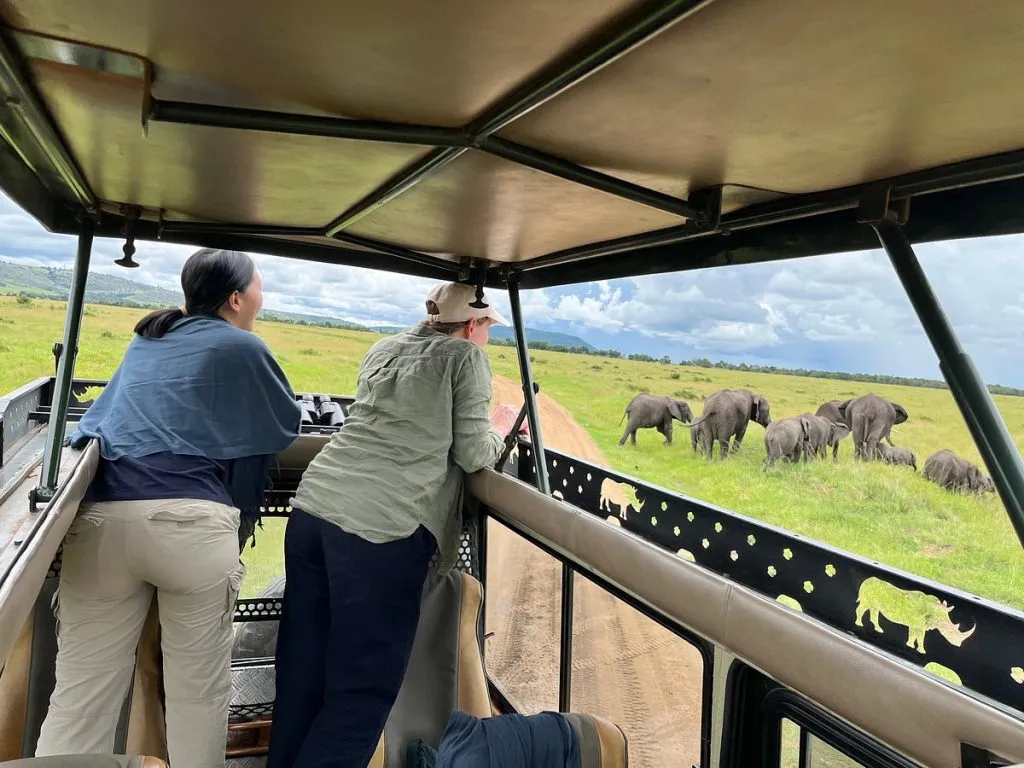
Before you go on a Great Migration Safari in Serengeti, there is one thing you should know: no amount of writing, movie, or picture can prepare you for what you will see. It is not just a show, it is Africa’s real, beating heart.
This is the main reason why lots of people go to Tanzania. It is not just a must of seeing wildlife, it is also a matter of seeing one of the last great natural processes in motion. This blog will get you into the front row for another incredible Serengeti Great Migration Safari 2027 – 2028, and beyond.
The Serengeti – The Place Where the Wild Still Moves
The Serengeti is a vast, old ecosystem that has been moving to the same beat for thousands of year.
Over 1.5 million wildebeests, along with zebras and gazelles, start a 3,000 kilometer circle through Kenya and Tanzania (Mara – Serengeti Ecosystem). They are pursuing the rains and life itself. By the way, they are not alone on this journey.
Predators like lions and leopards stalk the herds across the grass, cheetahs run over the plains in a whirl of muscle and instinct. Hyenas and jackals are hiding in the dark. And under the rivers, crocodiles wait, always and forever. It is a drama without a screenplay, and that is what makes it so exciting.
Serengeti National Park is an iconic wildlife sanctuary with more than just its animals. It is actually the unpredictability of the place that has caught the attention of travel-seekers for years. The migration doesn’t happen on a set schedule. That implies that no two safaris are ever the same, not even two days. People enjoy this location because of its unpredictable nature and wildness.
The Great Wildebeest Migration: Month by Month, Nature’s Biggest Journey
Your Complete Guide to Serengeti Great Migration Safari 2027-2028, best time for wildebeest migration 2027 – 2028, and beyond.
December to March: Ndutu’s Season of New Beginnings
The journey begins in the south, in the Ndutu Plains, which are the fertile plains. The herds come together by December, a time of new life. The savannah plains is like a nursery in February, with more than 8,000 wildebeest calves being born every day. It is a moment of vulnerability beauty and violence.
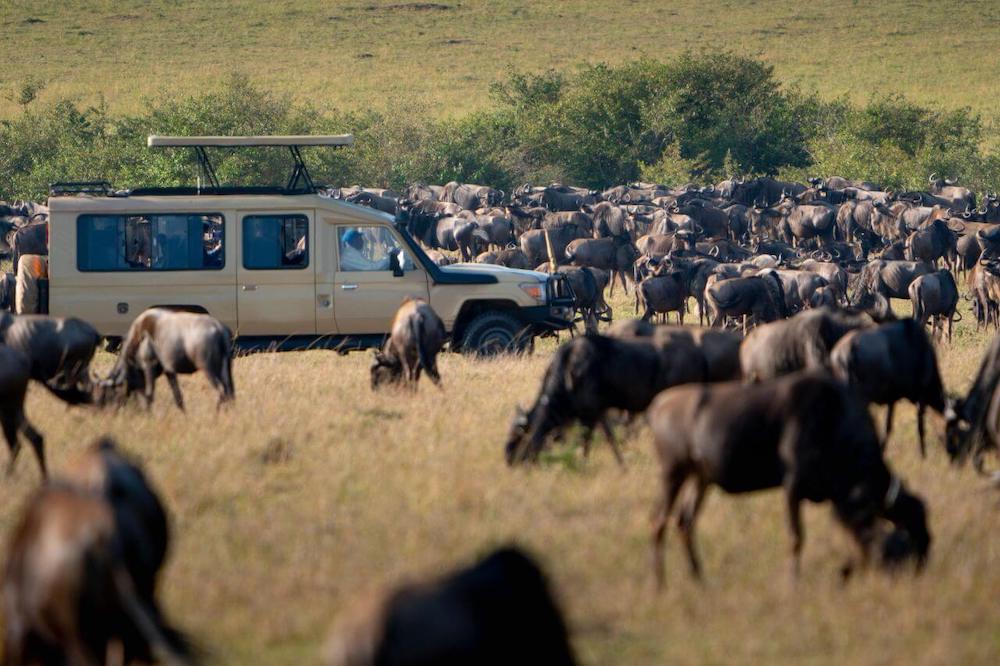
Predators are aware of the presence of the vulnerable babies, there are lions and hyenas on the plains, cheetahs run after newborn calves. You can see the circle of life, which is the oldest tale in nature.
This season is great if you want to feel the weight of the migration on your heart. The scenery is beautiful and lush, the predator action is intense, and a lot of drama is building in the air.
April – June: The Long March North
The arrival of the rain to the Serengeti in April, and the herds start their long trip north. The speed picks up. During the rutting season, the males struggle for partners, and dust flies up from their fights. A dynamic, living river of life stretches out into the distance with columns of wildebeest.
Visitors typically don’t talk about this time, but it is one of the best-kept secrets of the Great Migration Safari. The parks are less crowded, the plains are verdant, and the animal watching is fantastic.
The river crossings at the Grumeti in May and June give you a taste of the drama that lies a head, crocodiles hiding below and wildebeests jumping above.
July – October: The Mara River Drama
This is the time of year that most travelers dream about – the famous Mara River Crossings. The animals had made it to the northern Serengeti by July, and you can feel the strain. They wait on the banks of the river.
For days at a time. Then, all of a sudden, they rush a head without thinking.
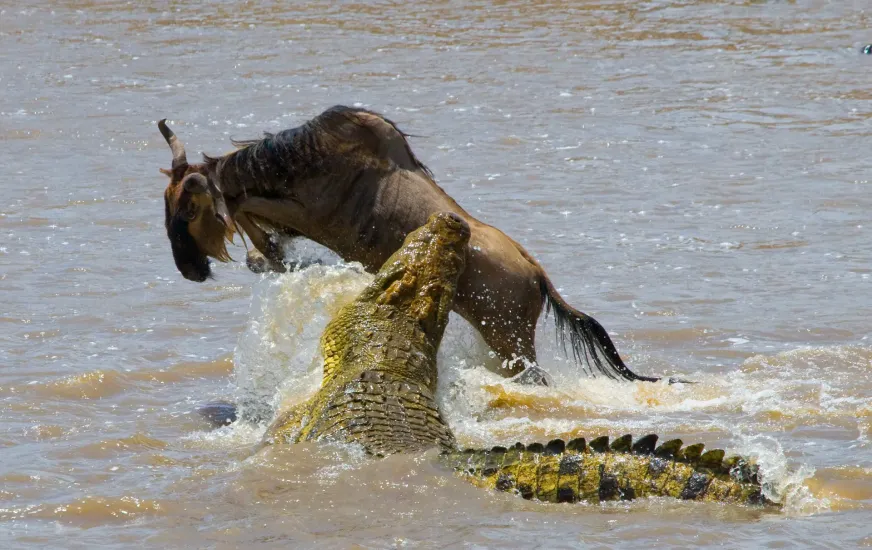
The river is full of action. Wildebeests jump into the water, Nile crocodiles attack, and predators wait on the other side. You can feel the chaos and survival happening in real time in your chest.
November: The Return to the South
The herds begin their return trip to Ndutu when the brief rains return. The speed slows down. The chaos goes away. And the Serengeti breathes forth. This is a calmer, more reflective time of year, which is excellent for photographers and those who prefer to be alone and peaceful on their safari.
Though the migration is the main headline, there are many stories in the Serengeti, waiting to be heard and shared. Each day is different, with some moments that keep your breath away and others that tear your heart.
When is the best time to visit, you may wonder. All year through, as you find fit for you, is the best time to visit: Afterall, it is subjective.
Where to Stay on Your Great Migration Safari: Timing Is Everything
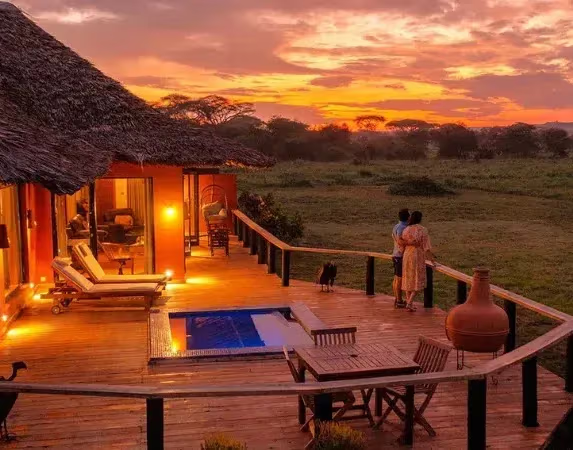
One of the biggest mistakes visitors make when arranging a Serengeti Migration Safari is not realizing how important location is. You don’t want to be far away when the action happens, you want it to happen right outside your tent.
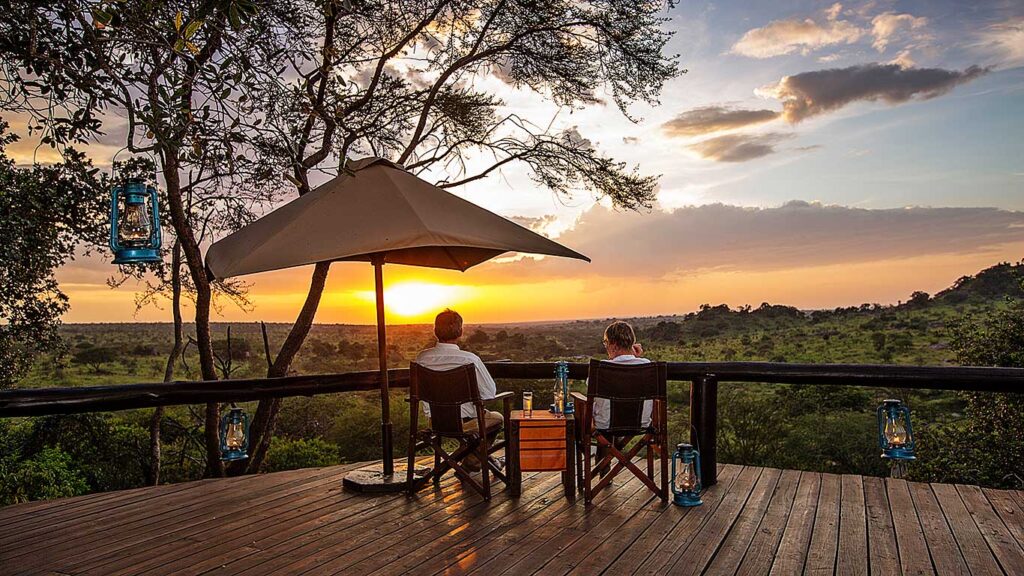
Our experienced travel consultant assist in choosing the right lodges and camps. These range from luxury tented camps with a view of the river to a mobile camp that moves with the herds. Booking in advance your luxury great migration safari lodges and tented camps is critical: they sell out even 6-18 months ahead.
Insider Tips for Planning Your Migration Safari in 2027-28
You can just go for a Migration Safari in Serengeti, you need to prepare properly because a bit of planning goes a long away in the wilderness. Here are the few tips
- Book a head of time, especially during the river-crossing season. Almost a year in advance, the greatest camps fill up quickly.
- Don’t rush your experience, take your time. Nature doesn’t follow a schedule. Set aside at least five or six days for the park
- Pack for everything. It might be cold in the mornings and nights. You need layers, a hat, binoculars, and a good zoom lens.
- Health comes first. Find out what vaccinations you need and communicate with your doctor on how to avoid malaria while on your safari.
The Journey Goes on After the Serengeti
The migration may be the best part, but Tanzania’s an enchanting destination whose experiences goes beyond Serengeti’s boundary.
The Big Five live in a natural amphitheater at the Ngorongoro Crater, which is a great place to explore after your safari.
In Tarangire National Park, you may walk among old baobab and herds of elephants. A night game drive safari is dream-like.
On white sand beaches of Zanzibar, you may exchange savannah dust for ocean breeze. You gain a richer, more profound sense of Africa when you blend the wild with the calm, much like dust with water.
Plan you Great Migration Safari 2027 -2028 and beyond with Rowin Africa Safaris – expertly crafted itineraries, handpicked lodges and local safari specialists for unforgettable Tanzania adventures.